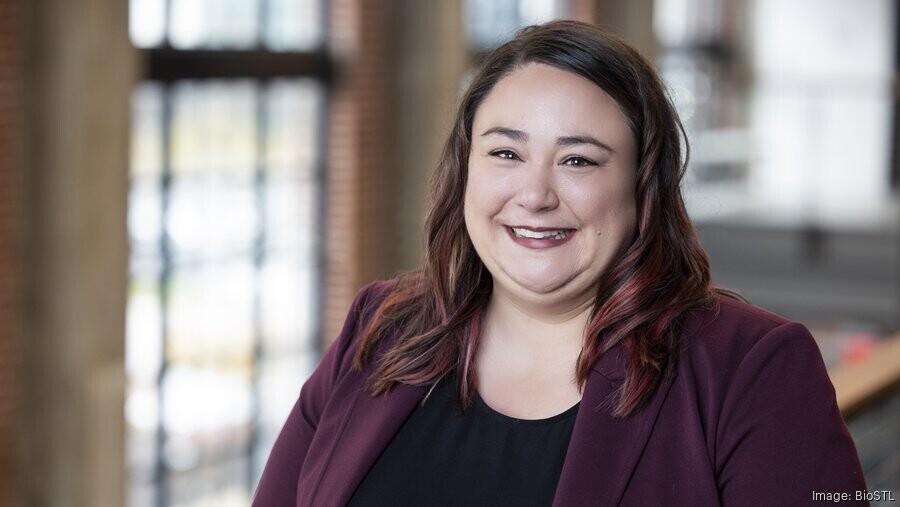
By Brittany Whitley, Director of Regional Workforce Strategy
Unlocking Talent Through Opportunity
St. Louis is home to one of the country’s most quietly powerful bioscience ecosystems—driving innovation across neuroscience, regenerative agriculture, human health, and more. But as the industry grows, so does the need for skilled talent. Our approach must meet today’s demands, anticipate future needs, and create attainable, skills-based career pathways to promote economic mobility.
The 2024 State of the St. Louis Workforce Report from St. Louis Community College says it loud and clear: the biggest challenge for employers is finding workers with the right skills.
High-demand roles—like manufacturing and patient care technicians—frequently see high turnover, leading to disruption for employers and talent. By rethinking how we connect people to opportunity through skills-based hiring, on-the-job experience, and intentional upskilling, this becomes a solvable challenge.
Registered Apprenticeships: A Scalable Solution
Registered Apprenticeship Programs (RAPs) offer a time-tested way to meet workforce demands. Unlike internships, apprenticeships are full-time jobs from day one, with clear training standards and built-in advancement based on skill and credential attainment.
The results are clear: more than 90% of apprentices stay employed after completion, and they gain an average lifetime earning boost of over $300,000.
RAPs are already working in fields like healthcare, IT, and manufacturing—fields where hands-on training is essential, and a four-year degree is not always required. Consider patient care technicians: the role is essential but associated with high turnover due to job demands and limited pay. An apprenticeship helps talent earn while they learn—with a built-in pathway to higher-paying roles like medical assistant or LPN.
There’s even more opportunity ahead. Bioscience roles in research, data science, and lab work are a natural fit. A university could offer a research lab technician RAP for student employees, or a biotech company could create a pathway to help experienced technicians move into advanced roles or in-demand roles.
Where Education and Experience Meet
RAPs are also a powerful way to connect employers with education partners. Colleges can deliver pre-apprenticeship and/or related technical instruction through credit-bearing programs, non-credit workforce training, or custom employer-designed offerings. This flexibility allows companies to align training with real-time needs while opening new doors for participants. Someone who hadn’t considered college, for example, might complete a short pre-apprenticeship to land an entry-level apprenticeship. While gaining paid work experience, they receive training through a college partner, later applying those credits towards a full degree using their employer’s tuition reimbursement program.
Local Momentum, Statewide Impact
We’re already seeing momentum locally. The Gateway Apprenticeship Hub, a bi-state initiative led by Madison County, Illinois’ Employment & Training Department, helps employers design healthcare, bioscience, and education RAPs tailored to their needs. Early bioscience RAP wins include the McDonnell Genome Institute’s Research Technician Apprenticeship—the first of its kind in Missouri–and several new partnerships to prepare, hire, and train biomanufacturing talent for entry-level technician roles.
In 2025, we expect to see both current RAP expansion and the launch of new biomanufacturing, healthcare, and research apprenticeships. The Cortex Innovation District is working to help district employers to hire apprentices more easily. We’re also exploring new partnerships with school districts to create registered youth apprenticeships that allow high school juniors and seniors to get career-oriented training and work experience before graduation.
MO-STAR—a statewide partnership led by the Missouri Department of Higher Education and Workforce Development, with BioSTL and Missouri Works Initiative as core partners—is building on-ramps to bioscience RAPs through pre-apprenticeships. BioSTL’s flagship pre-apprenticeship model, Missouri Biotechnology Essential Skills Training (MO-BEST), delivers community-based learning via certified instructors, portable classroom kits, and online tools. Related efforts like STLCC’s Biotechnology Boot Camp have already trained nearly 100 learners in bioscience core skills, verifying their skills through third-party, industry-recognized credentials—and building confidence for what comes next.
Now Is the Time to Lead
By expanding Registered Apprenticeships, we can equip more St. Louisans with the skills to power bioscience innovation. Employers gain job-ready talent, individuals access high-quality career pathways, and our region strengthens its position in the global bioeconomy.
The workforce gap isn’t a barrier—it’s a call to action. We have the building blocks. The partnerships are forming. Investing in RAPs is not just the right move—it’s the smart one. The question isn’t whether apprenticeships can help. It’s whether we’re ready to lead. 1
Read more about Brittany here.